Ian on composing: Where do the notes come from?
This is what I asked a young Icelandic “improvising” musician who was giving a concert in Monash University in Melbourne, Australia. I was there for countertenor Hamish Gould’s performance of my concert aria, Fortunato’s Journey. (See Scores Page)
The guy looked at me as if I were mad. It made me think of how immediate and in the moment, jazz players have to be, and how in improvisation you are so dependent on the other musicians you’re collaborating with. Traditionalist jazzers start with a standard tune that they all know, but then there are personalities, technical habits and common harmonic paths to follow. that lend themselves to the musicians almost instinctively, as they appear. And they know their instruments, of course, backwards, which helps. Nothing can replace playing or singing experience to build a composer’s inventive powers.
Schools and factions in composition have never appealed to me. Pierre Boulez (1925-2016) believed that composers who didn’t pursue a series of twelve notes to get their notes, were “useless”. He also wanted, only as polemicist of course, to blow up the opera houses!
Peter Maxwell Davies urged “amorality” on artists. Karlheinz Stockhausen said he came from the planet Sirius, while Nørgård took inspiration from Adolf Wölfli, the Swiss “outsider” artist.
Good role models? I think so, but take it with a large pinch of salt (potassium – not sodium – of course)
 This my own teacher, Per Nørgård’s, infinity series: It’s also a beautiful melody based on the Fibonacci proportional series (1-2-3-5-8-13…), which appears everywhere in building blocks in nature. All is dependent on the first two notes – this initial “gap” is like male and female interaction; it determines the whole “Family”.
The notes, as promoted by Arnold Schönberg, came from knocking hell out of that series (jiggling the twelve notes from C on the piano to the next C), then turning this cache upside down, higher/lower, backwards and round my lady’s chamber!
When young, I tried to teach myself “technique”: notes and numbers and lines of chords!.
But it’s creating works with clear sense of purpose and context that will beget the “technique” that’s required. As Britten once said: “I don’t want to write something just for my aunt Mary, but I don’t want to write something where aunt Mary won’t know where one’s going!” That’s one approach.
Does that “all-interval tetrachord” you’ve just constructed, have any true significance or character for this piece? Listeners need to” know where you’re going”. Artists have to empathise with the listener’s context, as well as their own. And that’s hard in 2026.
The audience for “avant garde” modernism has disappeared. Intellectual life, I won’t call it “civilisation” is under attack. However, I believe a society probably gets the composers it deserves.
I prefer to be gentler – like a magpie, I glean musical ideas from all-over. Then, I love them to bits! You only need a few lumps of very fecund material to make the biggest musical work – full of character or characters! This is what I learned from Nørgård and Maxwell Davies.
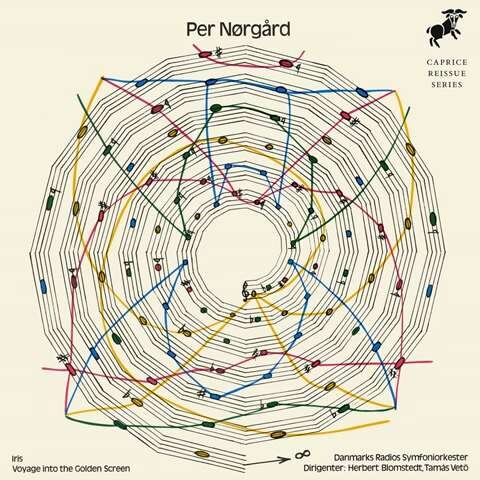
Look at John Tavener’s “Celtic Requiem”, Nørgård’s “Voyage into the golden screen” , or Arnold Schönberg’s Wind Quintet Op.26. OK, there’s no comparison. Or is there?
All of them derive from the musical tradition in fascinating ways, I feel…
One of the approaches when I’ve tried to be gentle is to introduce young people, professional performers and composers to each other. Just as I was introduced to Martin Dalby and Thea Musgrave at the age of 11, at the St Andrews meeting of the National Youth Brass Band of Scotland,
My work at the Spitalfields Festival in the City and East London in the early noughties exemplified this. Folk, Fiddle and Feeling involved students from two schools who collaborated with me, Andrea, a double bass player from The Liverpool Philharmonic Orchestra, players from The Brunel Ensemble and their conductor, Chris Austin.
Tim Ashley wrote in The Guardian of the culminating concert at Christchurch, Spitalfields:
“… advised by Ian McQueen…The [students’] works have a timeless immediacy that combines ethnic music with the poise and structural astringency of Bach….It is such projects that encourage individual voices and assure we have a compositional future.”
Job done, but only for a time!